
Acrylic, aluminium composite (Dibond), and Foamex are the three sign materials UK businesses choose most often, but each is designed for a different job. Pick the wrong material and your sign fades, warps or cracks years before it should. Pick the right one, and it stays sharp with almost no maintenance. This guide explains what each material is, compares them side by side, covers realistic 2026 UK costs and helps you decide which one fits your business.
Which Material Should You Choose for Your Sign?
A sign is only as good as the material behind it. The right board keeps your branding crisp and your colours bright for years. The wrong one warps in the rain, fades in the sun or cracks in the cold, leaving your shopfront looking tired long before it should.
Acrylic, aluminium composite (Dibond), and Foamex are the three materials you’ll most often see quoted by UK sign makers, and each suits a different situation. A premium acrylic reception sign and a budget Foamex exhibition panel are built for completely different jobs, yet both appear under the same “signs” heading on most supplier websites.
The material affects how long your sign lasts outdoors, how it looks under different lighting, how it handles impact, and how much you pay upfront versus over its full lifespan. Understanding what sets them apart saves you money and helps you avoid premature replacement.
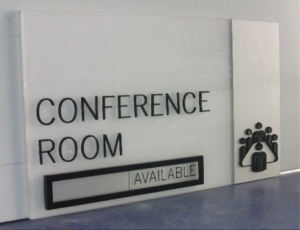
What Is Acrylic?
Acrylic, also sold under the brand name Perspex, is a solid plastic sheet with a smooth, glass-like finish. It comes in clear, frosted, opal and coloured options. Signs are typically printed on the reverse side of clear acrylic, so the graphic sits behind a glossy, scratch-resistant surface.
Acrylic is the standard material for illuminated sign faces because it lets light pass through evenly. It is also widely used for reception signs, office branding and flat-cut letters mounted on stand-off fixings, creating a floating effect that looks clean and professional.
The drawback is cost and fragility. Acrylic is pricier than Foamex or Dibond per square metre, and it can crack on sharp impact. It also expands and contracts with temperature changes, so outdoor fixing methods need to allow for movement.
What Is Aluminium Composite (Dibond)?
Aluminium composite, commonly known by the brand name Dibond, is a sandwich board made from two thin aluminium sheets bonded to a solid polyethene core. The result is a flat, rigid, lightweight panel that handles UK weather without rusting, warping or fading.
It is the go-to material for outdoor fascia signs, post-mounted panels, wayfinding signs and building identification boards. Dibond can also be V-grooved and folded into sign trays, which is how most illuminated fascia panels are built. A properly sealed Dibond fascia lasts seven to ten years outdoors.
What Is Foamex?
Foamex is a lightweight PVC foam board. It is cheap to produce, easy to cut into custom shapes and takes full-colour digital print well. Because it weighs very little, you can mount it with simple adhesive pads, Velcro, or basic screws.
Foamex works well for indoor wall signs, point-of-sale displays, menu boards, exhibition panels and temporary promotions. Outdoors, it is less reliable. Large Foamex panels can bow in heat or wind, and prolonged sun exposure fades the print faster than on aluminium composite. A Foamex sign in a sheltered outdoor spot may last two to three years; in full exposure, expect less. For more on the differences between indoor and outdoor sign requirements, see our guide to internal vs external signs.
Acrylic vs Aluminium (Dibond) vs Foamex: Comparison Table
| Feature | Acrylic (Perspex) | Aluminium Composite (Dibond) | Foamex (PVC Foam) |
| Finish | High-gloss, glass-like | Clean, flat, functional | Smooth matt |
| Weight | Medium | Light for its rigidity | Very light |
| Outdoor durability | Moderate (needs careful mounting) | Excellent | Limited (sheltered only) |
| Typical outdoor lifespan | 5 to 7 years | 7 to 10 years | 1 to 3 years |
| Impact resistance | Can crack | Dent-resistant | Can dent or snap |
| Lets light through | Yes (opal/frosted) | No | No |
| Best environment | Indoor (premium) or lightbox faces | Outdoor (permanent) | Indoor or sheltered outdoor |
| Common sign types | Reception signs, flat-cut letters, lightbox faces | Fascia panels, post signs, wayfinding | POS displays, menu boards, exhibition graphics |
| Relative cost | Higher | Mid-range | Lowest |
What Each Material Costs in the UK in 2026
Exact prices depend on sign size, print method and finishing, but these are realistic 2026 UK ranges for a standard flat panel sign:
- Foamex printed panel (3mm to 5mm): £30 to £150 per sign
- Aluminium composite / Dibond panel (3mm): £60 to £300 per sign
- Acrylic panel or flat-cut letters: £100 to £500+ per sign
For full fascia signs including design, manufacture and installation, the range widens. A non-illuminated Dibond fascia up to 3 metres typically costs £400 to £1,200 installed. An acrylic reception sign on stand-offs usually sits between £150 and £800. Foamex stays at the budget end because the material itself is inexpensive, but it is rarely used for permanent fascia work.
The cost gap between Dibond and Foamex looks small on paper, but the lifespan gap is large. A Dibond fascia lasting eight years works out cheaper per year than a Foamex panel replaced every two years.
How To Choose the Right Material for Your Sign
The decision starts with where the sign will live and how long it needs to last:
- Permanent outdoor fascia or wall sign: Aluminium composite (Dibond). It handles rain, frost and UV without warping or fading.
- Reception wall, office logo or professional branding: Acrylic. The gloss finish and stand-off mounting create a premium look visitors notice.
- Indoor menu board, retail display or temporary promotion: Foamex. Low cost, fast turnaround and easy to swap when offers change.
- Illuminated sign face or lightbox panel: Opal or frosted acrylic. Light passes through evenly for a clean glow.
- Indoor directional or safety signage: Foamex for budget, acrylic for quality. Outdoor safety signs need Dibond.
A good rule of thumb: if the sign goes outside, default to Dibond. If it stays inside, choose between acrylic for quality and Foamex for budget.
Get Help Choosing the Right Material From The Sign and Print Factory
Material matters as much as design. Picking the wrong board means replacing your sign years before you need to, while the right material keeps your business looking sharp with barely any upkeep. The Sign and Print Factory works with all three materials daily so that we can recommend the best option for your location, budget, and sign type.
Request a free sign quote, usually returned within 24 hours, or call 01384 912060 for a same-day rough figure.
We design, manufacture, and install signs for business customers across the West Midlands, including Tipton, Birmingham, Dudley, Walsall, Wolverhampton, West Bromwich, Oldbury, Wednesbury, Rowley Regis, and Blackheath.
Frequently Asked Questions
What Is the Best Material for an Outdoor Sign in the UK?
Aluminium composite (Dibond) is the best choice for permanent outdoor signs. Its aluminium skin resists rust and UV damage, and a well-made panel lasts seven to ten years in typical UK weather without warping or fading.
Is Foamex Suitable for Outdoor Signs?
Foamex can be used outdoors in sheltered positions for short-term use, but it is not ideal for permanent outdoor signage. Heat, moisture and direct sun shorten its life to one to three years. For long-term outdoor signs, aluminium composite is the better option.
What Is Dibond Made Of?
Dibond is a brand name for aluminium composite material. It consists of two thin aluminium sheets bonded to a solid polyethene core, creating a rigid, lightweight, weatherproof board widely used for UK shopfront fascia signs.
Can Acrylic Signs Be Used Outside?
Yes, but with care. Acrylic expands and contracts with temperature changes, so outdoor fixings need to allow for movement. It also scratches more easily than Dibond. For permanent outdoor fascias, aluminium composite is usually safer.
Which Sign Material Is the Cheapest?
Foamex is the most affordable of the three. It works well for indoor displays, temporary promotions and budget signage. However, for outdoor signs, Dibond costs more upfront but lasts far longer, making it cheaper per year of use.
Which Material Is Best for a Reception or Office Sign?
Acrylic is the standard choice. Reverse-printed on clear acrylic and mounted on metal stand-off fixings, it creates a polished, floating look suited to reception walls, meeting rooms and professional offices.